
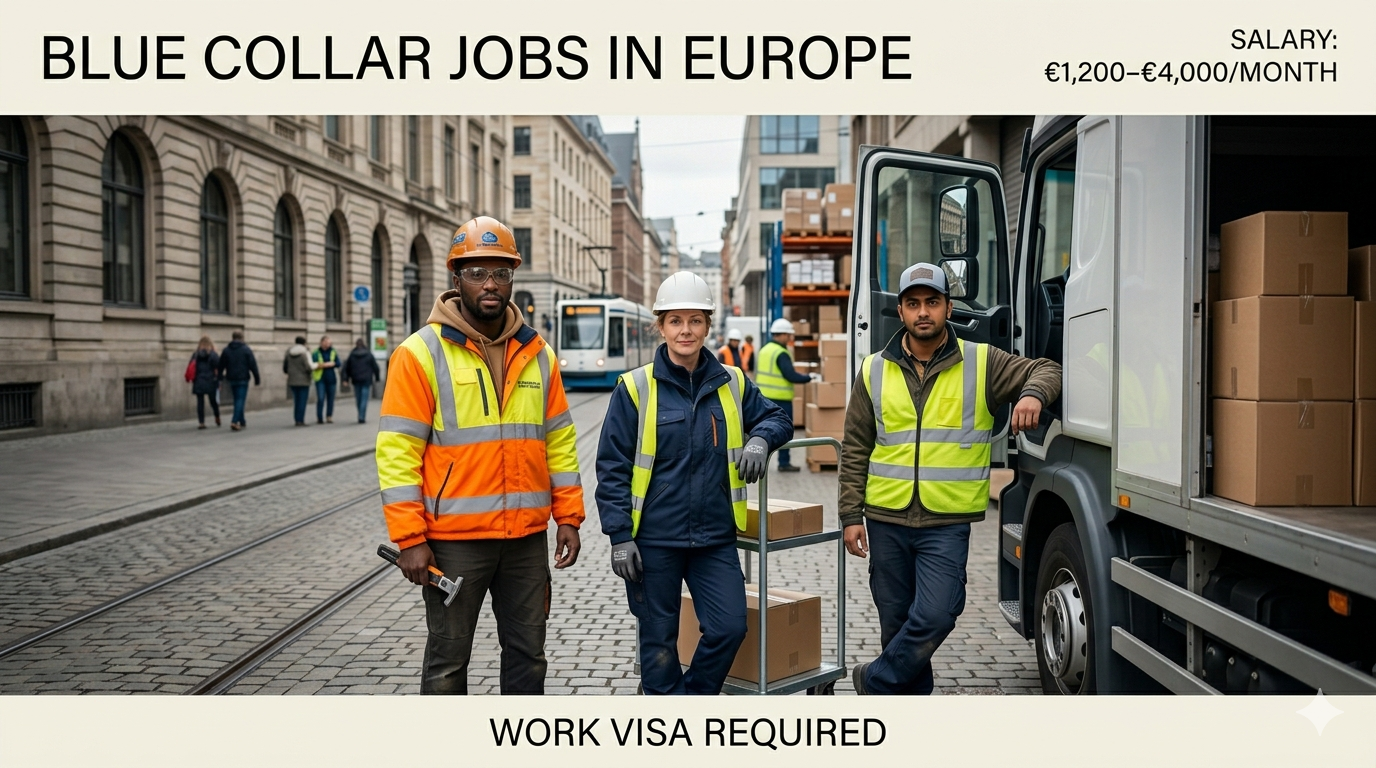
In recent years, Europe has become a popular destination for skilled and semi-skilled workers from India. Many countries in Europe are facing labour shortages, especially in blue collar sectors like construction, manufacturing, hospitality, and logistics. Because of this, they are offering work visa opportunities for foreign workers.
If you are planning to work abroad, blue collar jobs in Europe can be a great option with good salary, job security, and better living standards.
What Are Blue Collar Jobs?
Blue collar jobs are practical, skill-based jobs that usually involve physical work. These jobs do not always require a high level of formal education but need technical skills or experience.
Some common examples include:
-
- Electrician
-
- Plumber
-
- Construction Worker
-
- Factory Worker
-
- Driver
-
- Welder
-
- Cleaner
-
- Warehouse Worker
European Countries Offering Work Visas
Many European countries are hiring foreign workers and providing legal work visas. Some of the top countries include:
-
- Germany
-
- Poland
-
- Romania
-
- Hungary
-
- Netherlands
-
- Sweden
Germany is especially popular because of its Skilled Worker Visa and high demand for workers in various industries.
Work Visa Requirements
To apply for a blue collar job in Europe, you need to meet some basic requirements:
1. Job Offer Letter
You must have a confirmed job offer from a European employer.
2. Valid Passport
Your passport should be valid for at least 6 months.
3. Work Visa Application
Apply for a work visa through the embassy of the respective country.
4. Skills or Experience
Basic experience or certification in your field (like electrician, plumber, etc.) is preferred.
5. Language Skills
Some countries require basic knowledge of English or their local language.
6. Medical & Police Clearance
You may need a medical test and a clean police record.
Salary for Blue Collar Jobs in Europe
Salaries depend on the country, job type, and experience level. Here’s an average monthly salary range:
-
- Germany: €1,800 – €3,000
-
- Poland: €900 – €1,500
-
- Romania: €700 – €1,200
-
- Netherlands: €1,800 – €2,800
-
- Sweden: €2,000 – €3,200
In addition to salary, many employers provide:
-
- Free or subsidized accommodation
-
- Health insurance
-
- Overtime pay
-
- Paid leave
Benefits of Working in Europe
Working in Europe offers many advantages:
-
- Better salary compared to India
-
- Safe and healthy working environment
-
- Opportunity to settle long-term
-
- Exposure to international work culture
-
- Social security benefits
How to Apply for Jobs
You can apply for blue collar jobs in Europe through:
-
- International job portals
-
- Recruitment agencies
-
- Company career websites
-
- Government-approved hiring programs
Leave A Comment