
Introduction
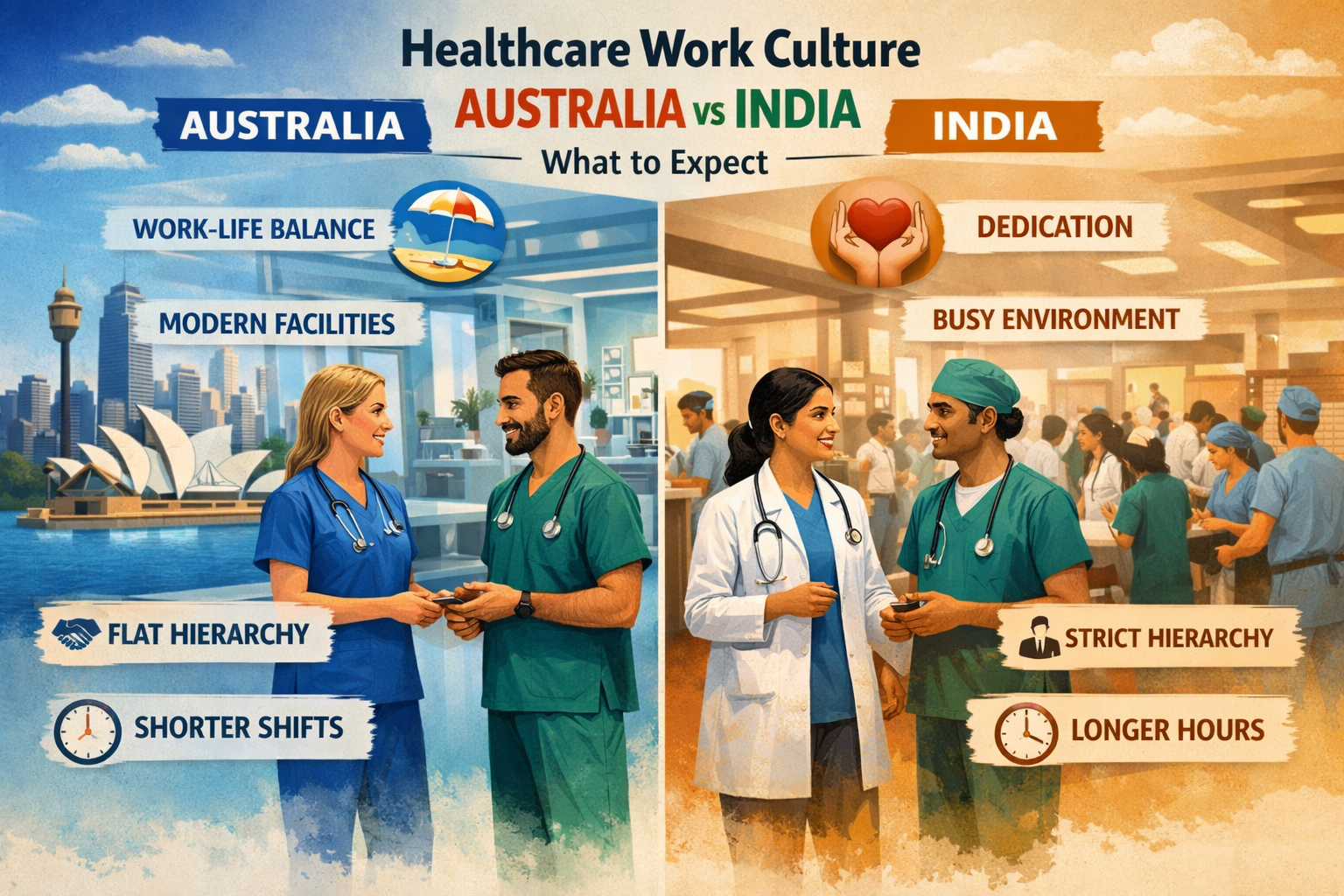
Many healthcare professionals compare Healthcare Work Culture in Australia vs India before deciding where to build their careers. Both Australia and India have strong healthcare sectors, but the work environment, expectations, and daily responsibilities can be quite different. Understanding these differences helps doctors, nurses, and other medical professionals prepare for international opportunities and adapt more easily to a new system.
Hospital Infrastructure and Work Environment
One of the biggest differences in Healthcare Work Culture in Australia vs India is the hospital infrastructure and workplace organization. In Australia, hospitals are well-equipped with advanced medical technology and structured workflows. Healthcare professionals usually work in a system that emphasizes patient safety, teamwork, and efficient healthcare delivery. Administrative processes are organized, which helps staff focus more on patient care.
In India, the healthcare system is diverse. Many private hospitals offer modern facilities and high-quality treatment, while government hospitals often face heavy patient loads and resource limitations. Because of this, the hospital work culture in India can be more fast-paced and demanding for healthcare workers.
Working Hours and Work-Life Balance in Healthcare
Another important factor when comparing Healthcare Jobs in Australia vs India is the difference in working hours and work-life balance. In Australia, healthcare professionals usually work in a structured shift system with regulated schedules. Hospitals focus on employee well-being and ensure staff receive proper rest, breaks, and overtime benefits.
In India, working hours can be longer in many hospitals, especially in emergency departments or busy government facilities. Healthcare professionals often manage a high number of patients, which can lead to increased workload and stress during shifts.
Salary and Career Opportunities in Healthcare
Salary is one of the main reasons professionals research healthcare careers abroad. In Australia, healthcare workers typically receive higher salaries along with benefits such as paid leave, insurance coverage, and retirement contributions. These advantages make Australia an attractive option for nurses and healthcare professionals looking for financial stability and career growth.
In India, healthcare salaries vary depending on experience, specialization, and the hospital type. While salaries may be lower compared to Australia, healthcare professionals often gain valuable clinical experience and develop strong practical skills.
Professional Growth and Training Opportunities
Professional development is another major difference in Healthcare Work Culture in Australia vs India. Australia provides structured training programs, continuing education, and opportunities for specialization. Healthcare institutions encourage staff to upgrade their skills and grow within the system.
India also offers strong learning opportunities, especially because medical professionals frequently deal with diverse and complex cases. This exposure helps healthcare workers gain hands-on experience and improve their clinical expertise over time.
Patient Interaction and Healthcare Communication
Patient communication styles also differ between the two countries. In Australia, healthcare providers follow strict policies related to patient rights, consent, and medical transparency. Patients are actively involved in treatment decisions, and documentation is a key part of the healthcare process.
In India, doctors are highly respected, and family members often participate in healthcare decisions. However, due to the high patient volume in many hospitals, doctors and nurses may have limited consultation time with each patient compared to Australia.
Leave A Comment