
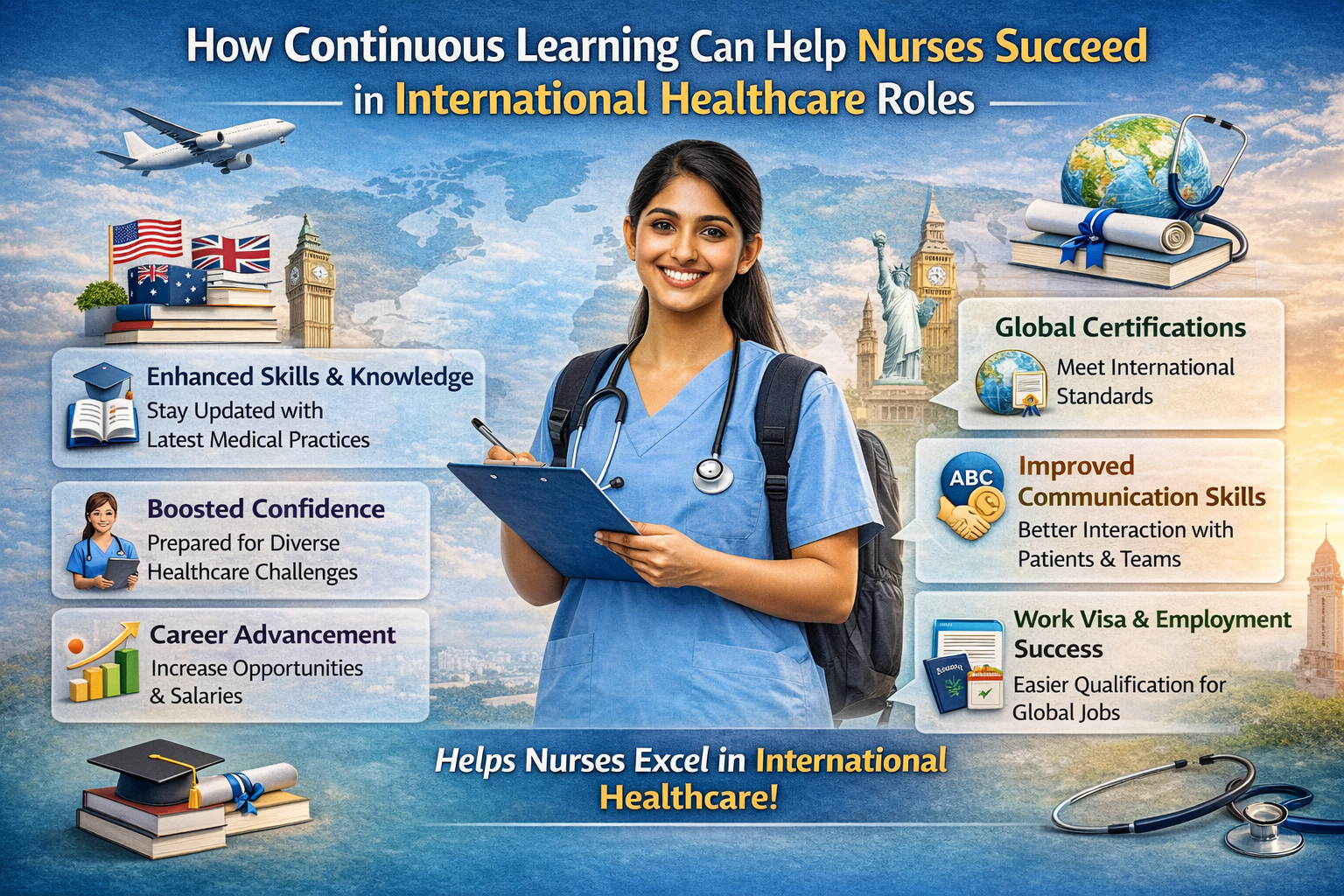
The global healthcare industry is evolving rapidly, creating new opportunities for nurses who aspire to build successful careers abroad. Countries such as the United Kingdom, Australia and Canada are consistently seeking qualified and adaptable nursing professionals to strengthen their healthcare systems. However, securing and thriving in these international healthcare roles requires more than basic qualifications. Continuous learning for nurses has become the foundation for long-term global success.
In today’s competitive environment, nurses who invest in ongoing professional development, advanced certifications, and international healthcare training stand out to global employers. Continuous learning not only improves clinical expertise but also prepares nurses to adapt to new healthcare systems, technologies, and cultural environments.
The Growing Demand for Internationally Skilled Nurses
Healthcare systems worldwide are facing staffing shortages, aging populations, and increasing patient care complexities. As a result, the demand for skilled nurses for international healthcare roles continues to rise. However, international employers prioritize candidates who demonstrate updated knowledge, specialized training, and commitment to professional growth.
Through continuous professional development (CPD), nurses can stay aligned with global best practices, evidence-based care models, and advanced patient safety protocols. This commitment to lifelong learning signals reliability, competence, and readiness for international placement.
Enhancing Clinical Competence Through Continuous Learning
One of the biggest advantages of continuous learning in nursing careers is the enhancement of clinical competence. International healthcare settings often introduce new medical technologies, digital documentation systems, and advanced treatment procedures.
By pursuing specialized nursing certifications, online courses, workshops, and skill enhancement programs, nurses improve their ability to deliver high-quality patient care in diverse clinical environments. Whether it’s critical care, geriatric nursing, pediatric care, or emergency medicine, specialized expertise increases employability in global healthcare markets.
Continuous education also helps nurses prepare for licensing examinations such as language proficiency tests and competency assessments required for overseas practice.
Building Confidence to Adapt to Global Healthcare Systems
Working abroad means adjusting to new regulations, healthcare policies, and patient expectations. Nurses transitioning to countries like the United Kingdom or Australia often experience differences in workplace culture, documentation standards, and communication styles.
Through international healthcare training programs, nurses can learn about global healthcare protocols, patient-centered care approaches, and multicultural communication strategies. Continuous learning strengthens adaptability, cultural sensitivity, and professional confidence—key traits that international employers value highly.
When nurses proactively update their knowledge, they reduce transition stress and integrate more smoothly into overseas healthcare environments.
Improving Career Growth and Salary Potential
Another significant benefit of continuous learning for international nurses is enhanced career progression. Advanced certifications and postgraduate qualifications open doors to leadership roles such as nurse educators, clinical specialists, and nurse managers.
International healthcare employers often offer higher salary packages to professionals with specialized expertise and additional credentials. By investing in professional development, nurses increase their earning potential and job stability in competitive global markets.
Furthermore, continuous learning demonstrates ambition and dedication—qualities that strengthen long-term career sustainability abroad.
Staying Updated with Global Healthcare Trends
Healthcare is constantly evolving with innovations in telemedicine, digital health records, patient safety systems, and evidence-based practices. Nurses who remain engaged in lifelong learning in healthcare stay informed about the latest global trends and technologies.
This knowledge enables them to provide efficient, safe, and high-quality patient care while meeting international accreditation standards. Continuous learning ensures that nurses remain relevant and competitive in an ever-changing global healthcare landscape.
Strengthening Professional Credibility and Global Recognition
International healthcare recruiters prioritize candidates who demonstrate commitment to excellence. Certifications, training programs, and skill development courses enhance a nurse’s professional portfolio and global credibility.
By actively engaging in continuing education for nurses, professionals build strong resumes that appeal to hospitals, aged care facilities, and specialized medical centers worldwide. Continuous learning reinforces trust, competence, and global recognition—essential components for succeeding in international healthcare roles.
Leave A Comment